
Medicare Part C explained


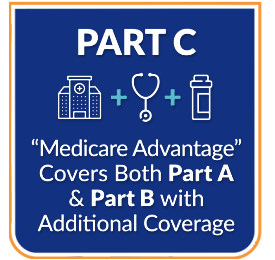


Medicare Advantage, or also known as Medicare Part C, is a bundled Medicare plan offered by private insurance companies. These private companies work with Medicare and make sure they provide full benefits to all beneficiaries.
In a Medicare Advantage plan, private insurance companies work with Medicare to offer parts A and B medicare plans with some additional services called “Part C.” Part C plan also includes traditional Medicare plans that may not cover as vision care.
A recent survey proved that 34% of all people with Medicare also have are enrolled with Medicare Advantage plans such as HMO or PPO.
Suppose you are planning to join a Medicare Advantage Plan. In that case, Part C will cover all of your Part A and Part B. Medicare Advantage Plans may also offer extra coverage, including vision, hearing, dental, and wellness programs. Most plans also include Medicare prescription drug coverage.
Medicare regularly pays a fixed amount for your health expenses to the companies offering private Medicare advantage plans. These companies follow the rules set by Medicare that can change each year.
A variety of options to choose from when you opt for the Medicare C plan as:
- Special needs plans
- Medicare medical savings account plans
- Private fee-for-service plans
- Health maintenance organization plans
- Preferred provider organization plans
Medicare Part C covers:
A regular Medicare Part C covers everything that includes in Part A and Part B and added benefits.
Medicare Part A. covers individual patient So, and Medicare Part C also covers the benefits of Part A, including:
- Care in a hospital
- Skilled nursing facility care
- Home health care
Medicare Part C also offers various cost-sharing amounts for individual care and home health care. Under the Medicare Advantage, your hospice care cost generally is covered by traditional Medicare.
Under Original Medicare, outpatient care is generally is covered by Medicare Part B. Outpatient care includes medically necessary services and preventive services to prevent or detect disease. Medicare Part C covers the same benefits as Medicare Part B, including:
- Doctor visits (primary care doctor and specialists)
- Laboratory tests and X-rays
- Ambulance services in an emergency
- Both inpatient and outpatient mental health services
- Durable medical equipment such as walkers and wheelchairs
- Preventative tests and vaccines, including flu shots
- Physical therapy
- Occupational therapy
- Speech and language pathology
Medicare Part C may have different cost-sharing amounts for outpatient care than Original Medicare has.
Medicare Part C Costs
Various factors determine the Medicare Part C costs, including deductibles, copayments, premiums, and coinsurance. This amount ranges from $0 to hundreds of dollars for monthly premiums and yearly deductibles
There are also various costs associated with Medicare Part C plans, including:
- Monthly plan
- coinsurance
- Drug deductions
- Part B
- In-network deductions
- Co-pays
Medicare Part C Enrollment
Medicare C enrollment period (IEP) starts from 3 months before a person turns 65. During this period, a person can get enroll in:
- Medicare Parts A and B
- Medicare Part C or Medicare Advantage
- Medicare Part D
Medicare Part C Eligibility
To enroll in Medicare part C a person needs to meet two eligibility conditions:
- Currently enrolled in Original Medicare both Parts A and B
- Reside where the insurance provider offers the coverage that they require.
- This plan is also available during its application or enrollment period.
Medicare Part C Premiums
Medicare Part C (Medicare Advantage) Premiums in 2025
In 2025, Medicare Advantage (Part C) plan premiums average approximately $17 per month. Many plans offer a $0 monthly premium beyond your Part B premium, depending on coverage and provider networks.
Typical premium range: From $0 up to around $200+ per month, depending on plan type, extra benefits, and insurer.
About 60% of Medicare Advantage enrollees pay no additional premium in 2025 if they stay with the same plan.